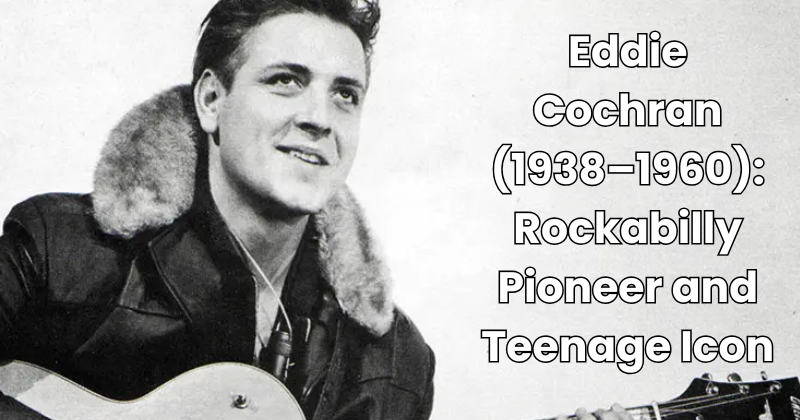
Eddie Cochran was an American singer, songwriter, and guitarist whose energetic performances and innovative style helped define the sound of early rock ’n’ roll. Born on October 3, 1938, in Albert Lea, Minnesota, Cochran grew up in a musical family and developed a passion for music at a young age. He learned to play guitar and piano, eventually forming his own bands while still in his teens.
Cochran’s career took off in the mid-1950s, as he became part of the rockabilly movement, blending rhythm and blues with country influences. His hits, such as “Summertime Blues,” “C’mon Everybody,” and “Twenty Flight Rock,” captured the rebellious spirit of youth and showcased his distinctive guitar work and charismatic vocal style. “Summertime Blues,” in particular, became an anthem for teenage frustration and is still considered a rock classic today.
Known for his dynamic stage presence, Cochran was a consummate performer who brought energy, attitude, and technical skill to every show. He was also innovative in the recording studio, experimenting with multi-tracking, overdubbing, and other techniques that influenced later rock musicians. His music had a lasting impact on artists like The Beatles, The Rolling Stones, and later generations of rock and roll performers.
Tragically, Eddie Cochran’s life and career were cut short at the age of 21. On April 17, 1960, while on tour in the United Kingdom, he was involved in a car accident and died a few hours later, leaving behind a legacy far larger than his brief life might suggest.
Despite his early death, Eddie Cochran remains a seminal figure in rock and roll history. His recordings continue to inspire musicians, and his pioneering approach to performance and recording helped shape the future of rock music. Cochran’s influence endures as a symbol of youthful energy, creativity, and the rebellious spirit that defined the birth of rock ’n’ roll.