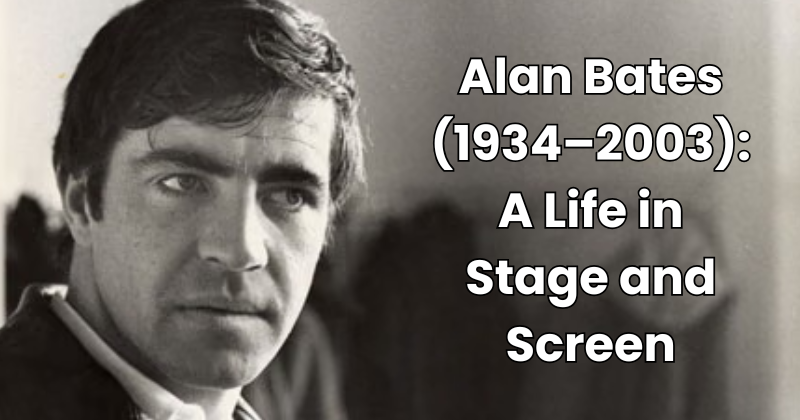
Sir Alan Bates was one of Britain’s most versatile and emotionally resonant actors, known for bringing depth, sensitivity, and quiet intensity to every role he inhabited. Over a career spanning five decades, Bates moved fluidly between stage, film, and television, establishing himself as a pillar of postwar British acting and a key contributor to the rise of modern British cinema.
Early Life and Training
Born on February 17, 1934, in Allestree, Derby, Alan Arthur Bates grew up in an environment that nurtured his artistic interests. Though his parents were not in the arts—his father a traveling salesman and his mother a housewife—they encouraged his early love of performance. Bates trained at the Royal Academy of Dramatic Art (RADA), where he cultivated the emotional nuance and naturalistic style that would come to define his work.
Breakthrough on Stage
Bates first gained attention as part of the emerging generation of postwar British actors associated with the “kitchen-sink” movement, which emphasized realism and working-class life. His breakthrough came with his performance in John Osborne’s groundbreaking play Look Back in Anger (1956), which helped transform the British stage and set Bates on course for major roles in both theatre and film.
Rise in British Cinema
During the 1960s and 1970s, Bates became a prominent figure in British New Wave cinema. His performances in films such as:
- A Kind of Loving (1962),
- Zorba the Greek (1964),
- Far from the Madding Crowd (1967), and
- Women in Love (1969),
showcased his ability to portray complex, morally layered characters. His role in Women in Love remains particularly celebrated, noted for its emotional daring and cultural impact.
A Versatile Actor Across Mediums
Bates never confined himself to one type of role. He portrayed romantic leads, troubled outsiders, comedic figures, and deeply introspective characters. On television, he earned acclaim for productions such as The Mayor of Casterbridge (1978) and later An Englishman Abroad (1983), directed by John Schlesinger, which revealed his understated but powerful screen presence.
Personal Life
Bates maintained a private personal life, though he was known among friends and colleagues for his warmth and his dedication to his craft. He suffered personal tragedy with the death of his son Tristan in 1990, an event that profoundly affected him.
Honors and Later Career
The late 1990s and early 2000s brought Bates renewed recognition. He earned numerous awards, including a BAFTA, and was knighted in 2003 for his contributions to drama. Even in his later years, he continued to deliver compelling performances, reminding audiences of his lasting artistry.
Death and Legacy
Alan Bates died on December 27, 2003, from pancreatic cancer. He left behind a legacy defined by emotional honesty, artistic fearlessness, and an unwavering commitment to performance. Today, he is remembered as one of the most important British actors of his generation—an artist who reshaped the landscape of stage and screen with quiet brilliance and extraordinary depth.
If you’d like, I can also format this as a Wikipedia-style article, expand sections, or add references.