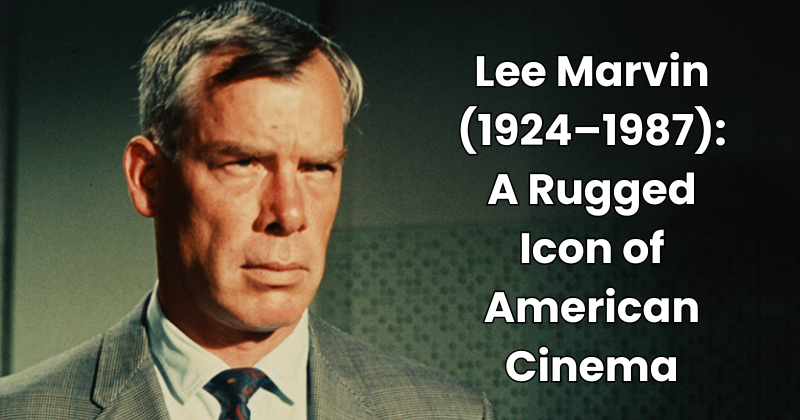
Lee Marvin was an American film and television actor whose gritty realism, commanding presence, and distinctive gravelly voice made him one of Hollywood’s most memorable tough-guy performers. Born on February 19, 1924, in New York City, Marvin’s early life was marked by rebellion and restlessness. After attending a series of schools and working various jobs, he enlisted in the U.S. Marine Corps during World War II. His combat experience in the Pacific—where he was wounded during the Battle of Saipan—shaped the steely authenticity he later brought to many of his on-screen roles.
Marvin’s entry into acting came almost by accident. After the war, while working as a plumber’s assistant in a local theater, he was asked to step into a role to replace a sick actor. This unexpected opportunity launched the career of a man who would eventually become one of Hollywood’s most respected character actors.
Throughout the 1950s and early 1960s, Marvin built his reputation playing villains, soldiers, and hardened lawmen in both television and film. His breakout roles included appearances in The Big Heat (1953), Bad Day at Black Rock (1955), and his Emmy-nominated performance as Detective Lt. Frank Ballinger in the TV series M Squad.
Marvin’s career reached new heights in the 1960s. In 1965, he delivered a tour-de-force performance in Cat Ballou, portraying both the drunken gunfighter Kid Shelleen and the villainous Tim Strawn. His dual role earned him the Academy Award for Best Actor, cementing his status as a major screen star. Subsequent films such as The Dirty Dozen (1967), Point Blank (1967), and Hell in the Pacific (1968) showcased his range, blending physical toughness with emotional nuance.
Despite his rugged on-screen persona, Marvin was known off-screen for his intelligence, dry humor, and deep appreciation of music and literature. His personal life, however, was not without turbulence, including a highly publicized palimony case in the late 1970s.
Marvin continued to work steadily into the 1980s, though declining health eventually slowed his career. He died of a heart attack on August 29, 1987, at the age of 63.
Today, Lee Marvin is remembered as one of cinema’s definitive tough guys—an actor whose authenticity and understated power left an indelible mark on American film. His legacy endures through the many iconic roles that continue to inspire actors and film enthusiasts alike.